This article will show you how to create a custom weblink. A custom weblink takes residents to a specific place in your catalog. You can share it on your city website, in emails, and on social media. You can also turn it into a QR code for flyers and other printed materials.
To learn how to copy a weblink that already exists for your site, such as the League Portal or a Public Calendar, review the View and Copy Weblinks article.
Instructions
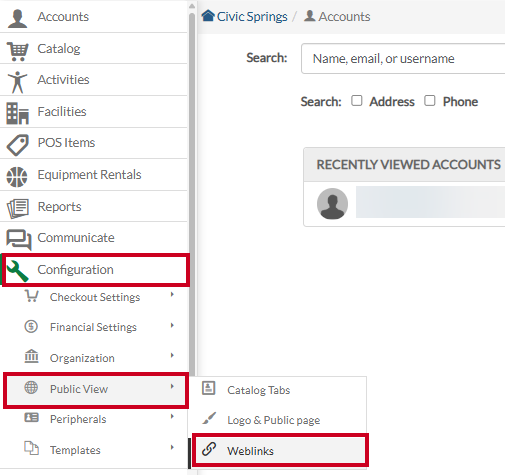
Navigate to Configuration, select Public View, then click the Weblinks option
Click Build a Link

Use the filters to configure the weblink’s settings

Category: Select one or more categories to use for the weblink
Location: Select one or more locations to use for this weblink
Age Group: Select Youth, Adult, or Senior as the age group for the weblink
Facility Tags: Select any applicable facility tags
Catalog: Select one or more POS categories to use with this weblink
Search: Add a keyword or code to the link
Days of the Week: Select one or more days of the week
Activity Tags: Select any applicable activity tags
Rental From: Enter or select a rental start date
Rental To: Enter or select a rental end date
Note:
All filters are optional. They may appear in a different order on your screen than in the example and text.
Navigate to the Weblink URL field and copy the Weblink

Open a new browser tab and paste the link into the address bar to preview the page it opens
Paste the copied link where you want users to find it, such as a website page, an email, a navigation link, or different areas in your catalog
Example Use Cases
Weblinks can lead residents to your public pages from many places. This section will share some common examples.
Municipal Websites
A weblink on your website can take residents straight to a specific place in your catalog. For example, a link on your home page might open the catalog where residents can rent a facility. This saves residents from searching for the right page on their own.

QR Codes
A weblink can be turned into a QR code using a third-party QR code generator. The QR code can then be printed on flyers, posters, banners, and other materials. Residents scan the code with a phone to open the page the weblink leads to.

Social Media
A weblink in a social media post can send residents directly to the page that matches the post. For example, a post about summer camp registration can include a link that opens the registration page in your catalog.

Catalog Navigation
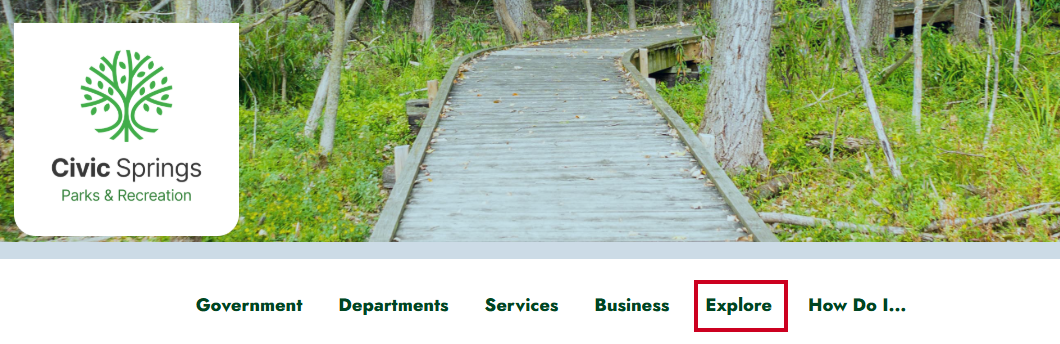
The header of your catalog can include navigation links that open a weblink. Users click one to reach the page the weblink leads to. To have a weblink added as a navigation link, contact Support.
Catalog Tab Descriptions
A weblink added to a catalog tab’s Tab Content field gives residents quick access to related pages while they browse the catalog. For example, a League Portal weblink For example, a League Portal weblink opens league schedules and standings. To learn how to get and share the League Portal weblink, review the View and Copy Weblinks article. To learn how to create or edit a tab, review the Create a Catalog Tab article.

Catalog Location Descriptions
A weblink added to the Description field of a location gives residents quick access to related pages. For example, a Public Calendar (Location) weblink opens the calendar for that location. To find this weblink, review the View and Copy Weblinks article. To learn more about locations, review the Create a Location article.
