This article will show you how to view and copy weblinks for your site. You can share these weblinks in many places, such as your city website, emails, and social media. Residents can use them to reach various public pages for your Recreation Management solution.
Instructions
Navigate to Configuration, select Public View, then click the Weblinks option
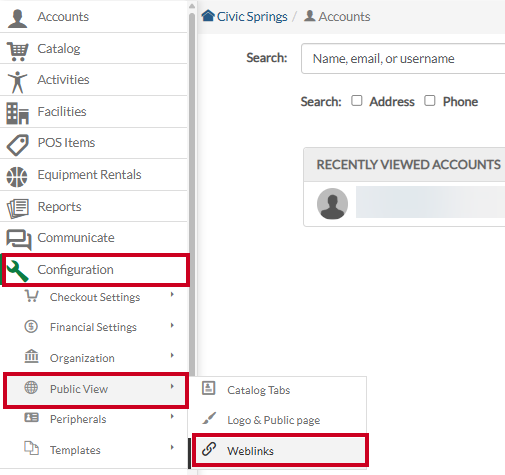
View existing, default weblinks customized to your site

Online Landing Page (Defaults to Catalog or Splash): Opens the first page residents see, which defaults to the Catalog or the Splash page
Online Registration (Catalog): Opens the Catalog, where residents can browse activities and facilities
Splash Page: Opens the Catalog Splash page
League Portal: Opens the public League Portal, where anyone with the link can view league schedules and standings
Public Calendar (Location): Select a location to create a link to a public calendar for that location
Public Calendar (Facility): Select a facility to create a link to a public calendar for that facility
Note:
If the default weblinks do not meet your needs, you can also click the Build a Link button to build a new custom weblink that can be copied and used as needed.

Highlight and copy any link, or right-click any link and choose Copy link address

Note:
For the Public Calendar (Location) and Public Calendar (Facility) entries, you can click the dropdown menu to select a new location or facility option. The link will update to reflect your selection.

Open a new browser tab and paste the link into the address bar to preview the page it opens
Paste the copied link where you want users to find it, such as a website page, an email, a navigation link, catalog tab description, or facility and location descriptions
Example Use Cases
Weblinks can lead residents to your public pages from many places. This section will share some common examples.
Municipal Websites
A weblink on your website can take residents straight to a specific place in your catalog. For example, a link on your home page might open the catalog where residents can rent a facility. This saves residents from searching for the right page on their own. To learn how to create a link to a specific place, review the Build a Weblink article.

Social Media
A weblink in a social media post can send residents directly to the page that matches the post. For example, a post about summer camp registration can include a link that opens the registration page in your catalog.

QR Codes
A weblink can be turned into a QR code using a third-party QR code generator. The QR code can then be printed on flyers, posters, banners, and other materials. Residents scan the code with a phone to open the page the weblink leads to.

Catalog Navigation
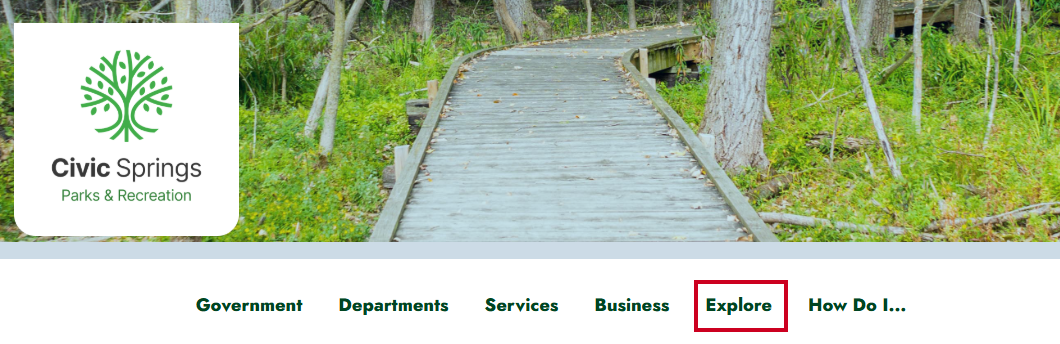
The header of your catalog can include navigation links that open a weblink. Users click one to reach the page the weblink leads to. To have a weblink added as a navigation link, contact Support.
Catalog Tab Descriptions
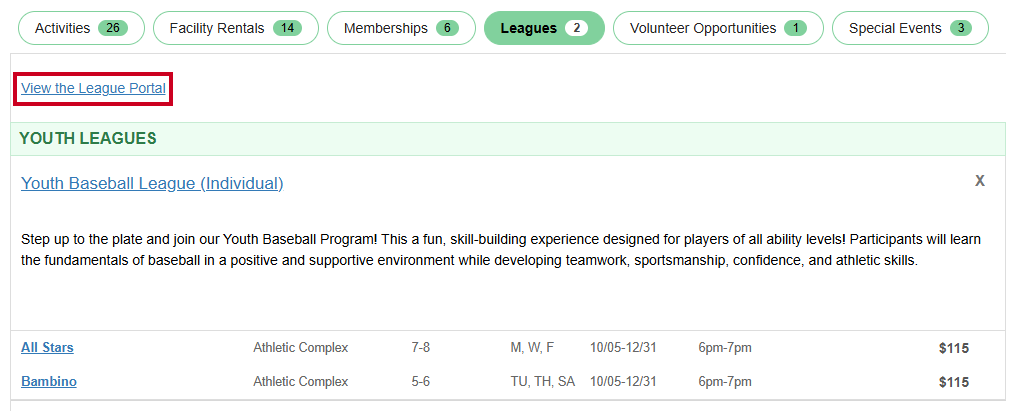
The Tab Content field of a catalog tab can include a weblink. For example, a League Portal weblink lets residents view league schedules and standings while they browse the catalog. To learn how to create or edit a tab, review the Create a Catalog Tab article. To learn more about sharing the portal, review the Public Access to the League Portal article.
Catalog Location Descriptions
The Description field of a location can include a weblink. For example, a Public Calendar (Location) weblink lets residents view the calendar for that location. To learn more, review the Create a Location article.
